Showing posts with label sensible approach. Show all posts

Monday, 18 September 2017

Target Practice

Well, it’s been nearly two weeks since my last update, packed full of goals as it was. What’s occurring?

1. Stairs

These are a lot easier now. I am firmly into the habit, despite having to occasionally leave a colleague or two looking mournfully out past the closing lift doors at me. It’s rare I don’t make it up the stairs in the same time as the lift takes, more or less, which is heartening. I wouldn’t say I’m entirely non-breathless, but (unless I take the stairs two at a time, which I sometimes like to do on the final flight, and even then) I’m a lot less breathless when I reach my desk.

So that’s nice.

Rocky running up those steps and bouncing in triumph

2. Lunchtime Walks

This has been going pretty well. I’ve managed to do this (or roughly this) every workday lunchtime, and have even fitted in a couple on non-workdays (walking to Newmarket Road and back on Wednesday - 1.4 miles either way; walking to Milton Country Park on Sunday - 1.5 miles either way). In fact, I definitely seem to have hooked into the “feeling weird if I don’t do it” vibe pretty quickly. In terms of goals, I do seem to have upped my pace for the lunchtime walks, which is groovy, though measuring inconsistencies (the first few times I kept forgetting to switch off the recording device until I had been pottering around in the canteen for a few minutes) mean that it’s hard to say whether I would have recorded a lower completion time in the first few anyway... However, the mean pace is consistently better (though sometimes a little slower than my average if I’m walking with someone else - getting breath to speak and all that). That one feels like a solid win so far (though I’ve had few weather challenges to overcome), even though I do feel like a dapper gent taking a lunchtime constitutional (yes, I do wear my famous hat).
Edwardian ladies strolling along a seaside promenade; in the foreground a small boy in a cap drops a toy and bends to pick it up


3. Isometrics

Bloody isometrics
. Well, I’ve finally hit upon a way to do them at least once a day - tag them on the end of my morning physio. Fuck it. I can always to an end-of-working-day one as an extra, but I’ve had trouble working that in, so I’ll at least have that one. I’ve only done this twice now, though, so no stats yet.
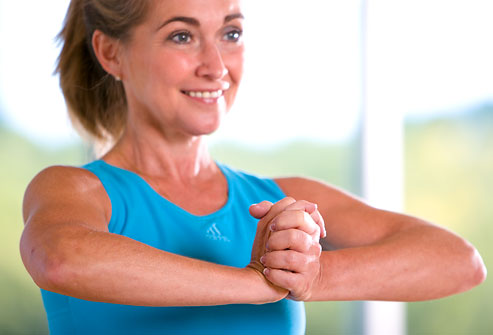
A jolly-looking white woman in a sleeveless top squeezes her palms together in front of her while faking looking happy about this


Time for some other goals/ feedback

4. Hydration

I’ve been using the FitBit to monitor my water intake. It’s a bit rubbish, which I knew it was, so I’ve been using various methods to improve that, and (apart from this morning, because Monday morning, amirite?) I’ve been doing pretty well. Not, you know, excellently, but better. And my evidence on the benefits on days with proper hydration in them is fairly bloody empirical, but you don’t want those details.

Advantages: All of them? Good for digestion, skin, metabolism, oh yeah and staying alive.

Disadvantages: Obviously I need to wee more. That’s part of the point though, so hey.

Goal: Get up to drinking about two litres of water a day without having to poke myself in the head to do so.

A blue, cartoon figure of a stereotypical water droplet with eyes, mouth, and tiny hands and feet says "Hello friend, you should drink more water." In close-up it says "So I can be in you."


5. Fitstar

As previously reported, I selected the “Get Strong” program from Fitstar, packed full of strength-building and cardio exercises in three-times-a-week, twenty-minute sets. So far it has not proved onerous to do the three sessions a week (so far Wednesdays, Fridays, and Sundays), though it’s significantly easier to not feel self-conscious when bobbing up and down to some perky fitness expert’s generic instructions when no-one’s in the house. (“Tighten those abs!” “Remember to keep a straight back!” “Keep it light - land on the balls of your feet!”) And the program does seem to keep track of which exercises I label “Too Easy!” and “Brutal!”, pushing me where I’ve indicated I’m up for that and not where I’ve said “Nope”.

Unfortunately, there are a fair number of exercises which require the adherent to put weight on one or both knees. After gingerly trying a couple of these and suffering both math and aftermath, I now instantly skip any with weight-bearing knee forms, label them “Brutal!” and indicate that I’ve done zero. Apart from the “press-ups from knee” which I do from the toes. So.

The exercises get my heart-rate up and many are moves I’d never have considered (read: in some cases didn’t even know they were A Thing). Some are nearly impossible to do properly in my living room, so require improvisation, improved immensely when I realised that I could pause the instructions while I rearranged things to roughly match.

Apart from some tightness and pain in and behind my knees which felt terrifyingly like a return to horrible old symptoms of 2011/12 until I ruthlessly did all the right things to loosen stuff, these exercises appear to be taxing me exactly the right amount.

Goal: Just keep going and ingrain the habit.


6. Weight

Argh. So, the side-effect of being more active? Yep - weight-loss. Which, in my case, is a bugger, and leads to friends advising me to eat more, and put on some weight.

I. Am. Trying. Believe me.

The balance of “types of food that won’t fuck with my now-shitty digestive system”, “quantities of food/ drink that won’t fuck with my now-shitty digestive system”, “time periods of ingestion that won’t fuck with my now-shitty digestive system”, and “oh, yeah, I’m still allergic to loads of stuff” with “go on, eat more and put on weight” is proving... problematic.

I am going to try protein shakes next. Because fuck it. There’s been very little advice online about this, and most of it is: “Hey, ladies, you don’t want to put on loads of fat (urrgh, fat), you probably mean you want to pile on lean muscle; here, have an avocado.” And while a) avocados are nice (especially mashed up with bacon and garlic-infused olive oil on brown toast), and b) more lean muscle would also be nice, c) I am finding it hard to keep warm when stationary and my less-padded arse has difficulty sitting for extended periods of time, especially on hard surfaces, dammit. A significant number of “weight gain diets for women” searches have led to the above advice, or even straight to weight-loss advice because apparently I don’t know what I’m talking about plus Western culture’s obsession with thinness = healthiness which gjjh&*HJ*$%&Jkj, basically.

Any advice on this would be super-gratefully received. In the meantime, I’m due to see the gastroenterologist in October, and I’m going to ask for a referral to a dietician/ nutritionist for this very reason, because at least they won’t advise me to eat more eggs, unlike even the actually vaguely helpful websites do. (I am super-allergic to eggs.)

Jerry (cartoon mouse) sits among food, dressed only in red shorts; he is tugging slices of what is probably provolone from between what is probably bread one by one, eating them in a single gulp, and licking his chops, hugely satisfied


And how is this all making you feeeeel?

Ah, that one. (How about super fucking hungry all the time?) Well, I’m feeling a bit more confident about my body and its ability to cope with physical challenges. I’m also enjoying the fact that I appear to be (slowly) gaining a measure of discipline over a lot of these things, which in turn makes me feel better about myself, which in turn makes me more likely to Do Things Right, so...

I’m also noticing a (unexpected at this stage) small but significant set of changes to my body shape and, well, the best word I can think of is texture. Specifically:

  • there appears to be more intense wall of muscle around my abdomen, especially evident when standing.

  • My thighs and calves are definitely more heavily muscled. Again, this is more evident when standing, but the calves, in particular, seem to be changing shape even at rest. Their texture at rest is different. Sorry - I can’t explain it better than that they’re denser? less wobbly? Maybe...

  • My forearms also have this change of texture. Not that they were ever particularly wobbly, but... yeah, they feel denser.

  • My biceps appear no different, but my triceps appear more defined, especially when my arm’s extended.

I am stiff a lot of the time - sitting still really does cramp me up, but I seem to be recovering quite well each time. And maybe some of that recovery is more psychological - I’m expecting my body to be more in command, so just act as though it’s going to be fine, and it is.

My digestive health is... mixed. I am trying to eat larger meals and that’s causing me pain and bad reflux issues, including impacting on voice and breathing. On the other hand, I know better how to deal with that, so that’s passing faster and I’m panicking less. Mostly.
Oh well. It still cleared up within a few hours, so that was nice.

I’d like to say I’m sleeping better, but that’s a Whole Other Thing that we’ll have to address in a separate blog post, possibly a couple of months down the line when all this has bedded in properly.

Haha. Bedded in? Bedded... Bed. Coz sleep, coz. Yeah. Ahem. Anyway. See you soon!

Tuesday, 5 September 2017

Preprandial Perambulation

So, as I said before, I’m keen to expand on my fitness activities now that I’m back at work (sedentary as hell) and no longer charging up and down hills and up and down several flights of stairs every day.

So new strategies for worktime fitness include:

1. Stairs

I currently work on the third floor, and am no longer choking horribly like I was this time last year (for AGES), so if I can go up and down the stairs to/ from the Edinburgh flat, I can do that at work. (Last year I was so ill that even going down stairs made me cough and choke. I got really reliant on the lift; I’m trying to kick that habit.)

Sometimes I go up two stairs at a time, then stand and gasp at my desk while I wait for my heart-rate and blood pressure to return to something approaching not-having-a-stroke. Two of my geographically close colleagues are so much fitter than me it’s not even funny, but they’re polite about me doing my landed-fish impression.

Useful for: leg strength, heart strength.

Disadvantage: makes me look a little antisocial at times when others are using the lift...

Goal: not to be out-of-breath after doing the full three flights.
 
 
2. Lunchtime walks

I work very near a patch of land in Cambridge that is approximately 0.65 miles in circumference - Parker’s Piece. It seems ridiculous to only step outside my building before home time when I have an errand in town that can’t wait until after 6pm. So, instead of sitting looking at t’internet the whole time, I figure I’ll step out and do a brisk turn around the Piece before eating lunch. Except that that’s a bit boring and not exactly very long. So I’ve worked out this more complex criss-crossing route that takes the walk up to about 1.7 miles and 36 minutes (including getting to and from the office building), making maximum use of the greenness and relative-lack-of-cars-ness.

Wacky Saltire/ Wobbly Kite - movement map courtesy of Strava

No doubt I’ll get bored with it after a while, but there’s a great deal less pollution and dodging people than if I walked in any other direction from my office. And I’m not going to just walk up and down the stairs. No-one wants that. I’ve invited other people along generally; let’s see...

Did it for the first time today, and here are the results:

I overheated so much... - stats courtesy of Fitbit

Short of actually jogging, I think I’m unlikely to get any better than that. And I’m not jogging for anyone - my knees are shot enough as it is.

Useful for: general fitness maintenance, leg strength, heart strength, getting away from screens and chairs, encouraging a good appetite for lunch.

Disadvantage: I’m struggling here, because anything I think of is tiny. Okay, let’s say that it’s dependent on weather, and in splashier months the choice of bike-ridden paths/ car-ridden Regent’s Terrace and muddy ground may prove tricksy.

Goals: Maintain a pattern of doing it every work lunchtime that it’s not horrendous weather for six weeks; bring it down to a 30 minute time by the Solstice.
 
 
3. Isometrics

About 50,000,000 years ago I was shown some isometric exercises (though she didn’t call it that) for my shoulders by my old physio. They were supposed to work on the small, stabilising muscles closer to the bone, to help prevent injury. Like everyone in the history of rehabilitation ever, I stopped doing the boring exercises when I felt like I was feeling better.

{sigh}

I have rigorously trained myself to do the big-muscle daily physio exercises every day, between waking up and breakfast. I’ve only missed one in the last few months or so, and that’s because I was full of snot and coughing like a pit pony. I need to get into a similar pattern with the isometrics, and frankly it’s ridiculous that I’m not because I don’t even need to get out of my chair to do them! So the notion is to have at least one time in the working day where I do them.  I’ve decided that it’s towards the end, when my colleague who sits next to the big window has gone home so I can walk over, rest my eyes on the distant view of the far side of Parker’s Piece and just bloody do my exercises already. It takes 2:45 minutes, so I’m not entirely sure why I don’t do ’em! :)

Useful for: much-needed shoulder stability, better posture.

Disadvantage: honestly, mate, there really isn’t one; you could even do it in the loo if you’re worried about people thinking you look weird doing it!

Goals: Maintain a pattern of doing it at least once a day every day (work or otherwise) for six weeks.
 
 
Thoughts? What fitness habits do you incorporate into your workday?

Monday, 14 March 2016

And then it all went a bit wrong...

What is it they say about having a crap dress rehearsal meaning that the real thing will be great?

I can only hope that it doesn't work for cycling like it does for singing, because I've been in some truly dire dress rehearsals that led to embarrassingly poor concerts.

So yesterday.  Yesterday I decided that I was going to finally have a play along the near-home map of the route I'd mapped out from Ely to home (north Cambridge). I'd even painstakingly devised a route on Strava that was Home to Ely.  Looks like this:


One small problem. If you "load route" on Strava, it in no way guides you. I didn't know that, so it went wrong quite quickly.  Basically this happened:


Firstly everyone and their dog were on Stourbridge Common, and the paths are not the smooth, well-maintained, recent, metalled surface of the busway. No. They are bumpy with uppity tree roots and switchback like no-one's business. And then I ended up in Barnwell.  I'm still not sure how.  As you can see, I went the wrong way in Fen Ditton for a while, then found my route which was, unlike as it looked on the Strava route planner, totally on-road.  On-fast-car-windy-hilly road.

I have in no way practised hills. The busway doesn't really do them. I haven't lived anywhere hilly for a while. I thought I missed hills. I still do, but my hips and knees were less sure, especially when being passed by fast cars.

And then I realised that I was trying to follow the "Ely to Home" route backwards, having smacked my thumb into the wrong one on my phone (the route for which I could barely see on the screen in bright sunshine as it was, as Strava denotes the route to come using orange against shades of yellow, and where you've been in bright blue), so I pulled over (again - I'd already lost a lot of momentum to this), stopped the recording, loaded the "right" route, and started the recording again.

Whereupon this happened:


As the youth say: I don't even. I just can't.

I was very pleased with myself, having gone wrong already a couple of times (long way around Stow-cum-Quy instead of through it? Okay!), to find the right road, and be ganging on through Lode (very pretty - nice, smooth roads, too).  I stopped when I figured I'd gone far enough to turn around and still get my miles - as I recalled, the "correct" way back was longer.

There was a pretty bridge with sunsetty shades all over the landscape. I stopped there:

Road Behind

View Ahead

And then I ate, drank some water, and set off on the "proper route".  By this point, I wasn't startled by going on the road with the whizzy cars, and I knew there was a hill coming up.  I was warmed-up and fed, and it was all good. Right?

Turns out the other thing Strava route-planner doesn't make clear is when something is so off-route it's a dirt track, and that the only other options are private farm roads or turn back.

I stopped, swore, turned back, stopped again, and programmed in a cycling route on Google Maps, which soothing voice navigated me all the way home (via some confusion in Fen Ditton, but a lot less confusion than anything that had gone before).

So, what's the conclusion?  The conclusion is that I have to make a conclusion - do I:

a) Stick to the boring-but-safe busway route, and just head on up to St. Ives (~12.5 miles away), then head home; or

b) Programme in a clever route on Google Maps and just do the crazy version anyway?

Both are tempting, for different reasons.  a) is safer, and will achieve my 25 mile goal without too much stress.  I will also get to see a different part of my training route that I haven't encountered yet. That's interesting, right?  And I'd already said that I would do that route if the weather is rubbish on Sunday. b) is the original challenge, and a heck of a lot more interesting. There are also pubs on the way that will afford wee stops if necessary.

On the other hand, I've now done a trek that was 74.8% of my eventual goal, and didn't break myself (though I'm really feeling it today). I call that a near-win.  I have also concluded that I'm not doing another big training ride on Wednesday - I'm resting these little legs (daily commute aside).

Friday, 11 March 2016

Progress and Technology

Hello!

Well, it's been a while, but I thought I'd give you an update.  Preferably one nothing to do with slightly scary mental health stuff.

So today I'll be talking about:

1. Training for the Sport Relief 2016 Challenge (sponsor me here)
2. Technology
3. General Health stuff


1. Training for the Sport Relief 2016 Challenge


This has been less fun that it could be - partly because I got ill between Christmas and New Year, and could (fairly) directly attribute that to going out on a training ride late in the day, getting cold with an exercise-induced lowered immune system, and then, instead of going straight home, went to the shop for food (a move that seemed logical at the time) where clearly some infectious bastard breathed on me. Garh

So what with having funtimes with breathing, then injuring myself (minor standard neck/ shoulder stuff), then the winds being insanely strong, I somehow let training drift into a puddle of excuses. I was still cycling pretty much everywhere (work, social engagements in Cambridge, choir rehearsals, anything where I didn't need to tote much gear) else, but no particularly challenging distance.

And then I checked my magical spreadsheet, which showed me that I only had a few weeks to go, and that I'd spent nigh-on two months not training. Eeeep! Instead of a steady increase of ½ mile every session, I was going to have to jump up more emphatically each time, especially if I stepped back to a shorter distance to kick back off again (because, despite being foolish, I do learn - slowly - from my past mistakes with exercise).

Mon 28-Dec-15: 16.4 miles, 1:39:32 hours (64% of end goal)


Wed 24-Feb-16: 10.1 miles, 0:57:14 hours (39% of end goal)


Sun 28-Feb-16: 12.6 miles, 1:11:38 hours (49% of end goal)


Sun 6-Mar-16: 15.5 miles, 1:29:16 hours (60% of end goal)


Wed 9-Mar-16: 17.7 miles, 1:41:25 hours (69% of end goal)


I am still aching after this last one (cold, damp, mizzly, long; an exercise in self-discipline/ persuasive self-talk), and currently wondering two things:

a) How much of a percentage of the end goal should I aim for?

b) Should I do a training cycle on the Wednesday before the Sunday 20th ride, or am I better off having a rest (apart from work cycling) that week?


2. Technology


After agonising over gadgets, I found the one that was the best fit: a FitBit Charge HR. Of all the things that I wanted an activity tracker to do/ be, it only doesn't do one of them: GPS tracking. On the other hand, it (along with its concomitant app) does everything else, and things I didn't even know I wanted it to do (and some other things - like calorie counting - that I'm resolutely ignoring).  It's good at working out when I've been cycling for short stretches, but the longer ones confuse it, so I have to manually record them, which isn't exactly taxing.

It's proving useful for helping me keep track of (and manage by increasing) my water intake, gamifying my fitness efforts, and it looks slinky on my wrist (it functions as an actual watch as well).

It's also proving useful during anxiety - it turns out that the thumping heart sensations are often misleading: my heart-rate will rise slightly, but not anything like as much as it feels. This is proving remarkably helpful in swift calming and fending off potential full-blown attacks.

And I've bought a fancy water bottle that's easy to carry around work (I saw someone else with one and desired it greatly), means I don't use up lots of plastic cups (yay environment), and measures much more precisely how much I've drunk during the day at work/ during cycle rides.

3. General Health stuff


I am generally well. However, my hip joints (especially my right one) are not. I have been mostly ignoring this and trying to find comfortable positions, but the "it's reliably achey by 10pm" rule has shifted to "it's reliably achey all the damned time and difficult to bear by 10pm".  And now the right one keeps going out of alignment when I get up from a chair and start walking. Unfun. So I need to go and see someone about this.  Sadly, my former physiotherapist has now retired, so I will need to begin the Quest for a Local Physiotherapist Who Actually Understands HMS/ EDS all over again, though armed with more knowledge than last time I started.

My lower left-hand back aches reliably after about 6-7 miles of continuous cycling; less if hills are involved.  I've been advised that I need to get my posture on the bike checked and the bike's setup amended by experts.  As in all things requiring experts, this is not cheap.  If it prevents some further physiotherapy sessions, mind, it'll be worth it.

I forgot to renew my gut medication prescription last week.  This will NEVER HAPPEN AGAIN.  I have come to rely on not being in constant abdominal agony - turns out I'm on PPIs for life. A small price to pay unless, of course, the NHS is dismantled. O_o

I'm beginning to see why people with my condition (especially those with more severe versions) get into a cycle of morphine use.  I'm still avoiding even paracetamol unless my neck's particularly bad and I want to sleep (and nothing I've got touches migraines, so there's no point there either), so we'll see how long I can keep this straight-edge attitude to pain management up...


Thanks for reading so far! :D More updates to come, more frequently and smaller, especially in the run-up to the Sunday 20th challenge. Did I mention that you can sponsor me...?! :D

Monday, 19 October 2015

Phase 1 Begins

After my bike challenge proposal, I decided on a vague training regimen of increasingly long trips, building up a mile or so a week, until I was near enough to my goal of the full distance between my house and Ely Cathedral.  I would do this on Sundays, and maybe Wednesdays, and I would neither wuss out nor break myself.

I spoke to colleagues who've trained for and completed cycling challenges such as London to Cambridge, or 100 mile round trips.  One of them came up with the excellent suggestion of using the busway's cycle path (since I live so close to one of them) for training, and another suggested a stepping programme of: increase, increase, step back, increase, increase, step back, etc. so that my baseline is always moving inexorably upwards. She also said that I should work out whether I'm stepping up time or distance. Both of them told me to listen to my body.

I discussed with R on Saturday how much I would do for the first step. I said: my longest usual non-stop journey is 20-25 minutes (my house to Cambridge Junction), so my first one should be slightly longer than that - 15 minutes one way and 15 minutes back. I discussed the ramifications of different options to an intricate level detail, and was reminded explicitly that I shouldn't "munt [my]self" on the first step - stick to 30 minutes. Oookaaaay...

Sunday came, and I watched myself procrastinate in the worst ways until I realised that I was basically waiting for it to be too late/ too rainy to go out. It hadn't rained, and I was disappointed.

Ah.

So I got off my arse, put what turned out to be too many layers on, set a count-down timer for 17 minutes, and got on my bike.  Here is the route I took:


It started off extremely boring, once I'd got onto the busway cycle path. Soooo dull.  I was pleased I'd opted for music, though I was sorely wishing for company. Quite how that would work, I've little idea yet - hands-free walkie talkies...?!

Anyway, after a while we left the science park behind and the landscape started getting interesting. More fields, more trees, am unexpected body of water, less noise. The little wiggle towards the left-hand side is where the cycle path abruptly jumps over three roads, including the busway, and I confidently crossed only two of them and ended up heading for a disused siding (the busway used to be a railway).

What went well?

+ I managed the distance
+ I didn't injure myself
+ I maintained a decent speed (av. 9.6, max. 13.6)
+ I felt fine (no significant aches & pains) during and after
+ I remembered not to take my usual heavy load of more urban gear with me

What could have gone better?

- I didn't stretch afterwards (probably the main reason I'm feeling it a bit more now)
- I didn't check bike's health (turns out you should inflate the tyres when heading off on a journey)
- As C predicted, watching me leave with all my layers, I massive overheated, especially on the way back.
- The procrastination!

What will I do (differently) next time?

> Start the journey colder (fewer layers, with options in saddlebags)
> Wear smaller shoes (my Big Black Boots weigh about 0.5kg)
> Check the tyres (and other things) first!
> Set a time for setting off and stick to it.

I'm definitely going to stick with the busway route for the next few iterations as a way of building up stamina and hours spent in the saddle while I level up.  As training ground it is excellently safe, and it forces me to keep going for longer, as there are only a few traffic lights, unlike any in-Cambridge cycling I do, which is packed with traffic lights and roundabouts, etc.  In fact, I'm almost tempted to switch the challenge to be "from home to St. Ives and back" because the busway to St. Ives is about 12.3 miles. There would be less dicking about with trains to get to the main leg of the trip, and it would be - for the most part - very protected from car traffic.

However, it would be extraordinarily dull.  I've had a look at the (mostly) off-traffic route from Ely, and it's via Wicken Fen and Anglesey Abbey - interesting local places I still haven't been to yet. I could make a proper (mini-)adventure out of this! :)

There's also an amount more hill (for this part of the world) going on. I haven't decided yet whether that's a good or bad thing.  I'm not convinced I want to end the journey uphill...

As the training progresses I'll get a better idea of how well my body is coping.  As each segment necessarily gets longer, it'll also be a test of my commitment to the goal - I'm not someone who's currently coming down with loads of spare time as it is...

More updates to come over the next few weeks...

Tuesday, 13 October 2015

Steps Forward and Back

So, I'm back on the bike again. What do you mean, you didn't know I was off it...?!

{Checks back catalogue; curses}

Okay, so, it looks like a) I've been somewhat quiet on this front, and b) history repeated itself a bit.  Here's what happened over the intervening months since my last post:

1. Cycling every day (pretty much; certainly work days when I didn't have gig gear to carry, and Wednesdays when I had real life people meetings in places).

2. Physio every day (EVERY day; like a BOSS).

3. Mat exercises twice a week (come on!).

4. Eating a balanced diet.

And then August happened.  And August has Edinburgh Fringe in it. So no cycling from 19th August onwards, but lots of walking, and a handy new wearable gadget that maps how much and where I walked (because my passive movement tracking app stopped working).

So I scaled Arthur's Seat (yay!) and even coached someone else up it (come on!). Didn't even injure myself, unless you count sunburn.  I even kept up my physio and the strength-building mat exercises (despite some logistical difficulties - you try doing crunches on a mat on a polished wooden floor... without sliding across it and into a table).

And then I fell over on my face on a simple walk back down an urban hill, a couple of days later, and lots of health things cascaded, including my one filling jarring free and me getting a lot of pain and then a rubbish temporary filling which didn't let me chew so my nutrition was difficult to maintain and yeah - living off liquid food makes you lose more weight than you're comfortable with, if you're me.

Arse.

And then the trip back from Edinburgh with Too Much Luggage and bad lifting form and behold - buggered wrist.

So I was sensible - cycling hurt my wrist, so I paused on cycling and did some stretching and strengthening exercises for the wrist, and stayed off the press-ups, etc.  Then I got back on the bike. Yay! Then I got back into the mat exercises. Now, bear in mind that I hadn't done any since August, because I didn't - I just charged on ahead regardless like someone who was intent on injuring myself. Which I did.

This was 30th September. 1st October I got on the bike, unaware of how much I'd buggered myself. By the time I was heading home, it was clear that what I needed to do was immobilise that joint as much as possible.

It's nice to find that I've learned something.  I didn't prevent the injury this time, but I prevented it getting worse.  I immobilised as much as possible, asking for help, reducing movement, adjusting everything I could to ensure that as little strain was put upon the joint as possible. (Except on Thursday 8th when I joined in a yoga conversation in work and decided to demonstrate that I shouldn't do a certain move by doing it. 24 hours of migraine-like pain later and I'd learned another lesson about hypermobile injuries.)

So apart from yoga foolishness, I am pretty much recovered (read: it still hurts a bit but I can use it and I was more stressed by not being active) and back on the bike,  I cycled to Milton Country Park on Sunday with a friend to do some walking and wittering, then to and from work yesterday and today.

It was somewhat sobering to look back at the previous two blog entries and think: oh, so exactly like 3-4 months ago, huh? I left behind some good advice for myself, though, so that's a blessing.

In preparation for 20th March - Sport Relief again, baby - I'm going to be setting up a plan for increasing activity, strength, endurance, and general fitness. I'll keep you all posted as to what's next...

So, what's the current state of play (physical health-wise), all told? I am still a little hurty in the shoulder-neck joint and in my right wrist, and I'm finding it hard to put the weight back on. (And yes, I've tried eating all the biscuits - all that happened was I felt like crap. Presumably I need to eat a bunch of steaks and cheese.  Who knows?  All I know is that there are very, very few people out there who want to talk about the problems of losing too much weight and discussing how to put it back on.) So there it is.

Monday, 22 June 2015

Changing Relationships

So, I’ve blogged before about pain. About what “stop comes before ow” really means and how you can be guided by, but also ignore pain if needs be.

As I get more into the old exercise regime, the more pain I’m experiencing.  Some of it is “good” pain - e.g. the stiffening and burning of artfully-shredded muscle fibres that are on their first steps to growing back thicker.  Some of it is “bad” pain - e.g. the twanging of a shoulder joint that’s experienced injury due to superfluous effort in a less-advisable position.

Now, I’m prone - like probably every enthusiastic bendy - to overdoing things, breaking myself, and having to take a break from exercise as a result.  This has been well-documented in me, even as recently as last year’s big fitness push, and I find myself there again, having gone too hard on the old press-ups last week and now having unilateral neck pain, and pins-and-needles in my left arm due to a twanged shoulder. (Yes, it’s The Particularly Borked Shoulder.)

But something occurred to me last week, as I was going up the stairs and thinking: “yep, this is an injury, not just a post-exercise burn” - it’s not a disaster.

Let’s say that again: It’s Not A Disaster.

In the past, the pattern has been: start exercise regime, forget sensible approach after a couple of goes (at most) and overdo things so that an established weak point is compromised, curse a lot, rest for ages, start again only after I’m really fed-up of being unfit.

And I’ve managed to manage that somewhat - I’ve been building more slowly (last week notwithstanding), being more alert to potential injury, stopping sooner, and giving myself space to recover before getting back into things without leaving it so long that I’m actually more prone to injury if I try coming back in at the same level.

But in the past it’s been all: oh! ow! and then beating myself up for a muppet. Catastrophising the pain and popping myself in the victim box all over again. The pain is punishment! The pain is validation! The pain is a full-stop!

Waaaiit... rewind - the pain is validation?  Hmm, sounds like some kind of brain weasel talk to me. And it’s a problem that, the more I think about it, the further it goes back for me.

There’s an awkward balance to be struck when your body is limited in a particular way.  You have to own it in order to manage it.  But sometimes that very self-definition can take you deeper into NOT managing it.  Speaking for my own situation, it’s useful for me to say: “Because of underlying weakness and historical issues, I stand a much greater chance of injury if I lift things above shoulder height, so I’ll avoid doing that.” It’s less useful to say:I’m limited, so I can’t lift things, so I won’t.”  It’s useful to acknowledge where pain stops being a good guide and is just distressing/ distracting/ a sleep-killer.  It’s less useful to shy away from all pain and hold myself in a kind of twitching huddle in a corner, hemmed in by painkillers and fear, outraged because I’m not pain-free.

Because I’m never going to be pain-free.  I don’t know about anyone else, but I know I’m always experiencing pain somewhere at any given time. There are some Usual Suspects, but sometimes they all kick off, and sometimes it’s a new place, and  most times it’s only one or two of them.

But if I define myself purely by my pain, and use that as an excuse not to do things: I Am A Limited Person, Here Is My Badge Of Pain, that’s, well, frankly a bit rubbish.  Pain as validation as a lesser being is a weird circular argument that does no-one any good. I wouldn’t expect anyone else to be able to get away with that, so why me?

And pain is clearly not a full-stop. That was the conclusion on the stairs - if I see the muscle burn of good exercise as a landmark on the way to becoming more awesome, I need to start treating the Usual Suspect Injury Pains as landmarks as well, somehow. Whether as a learning point of how far not to push things, or some kind of psychological step on the route to better self-acceptance, or better ability to ignore unfixable pain, there must be some use in it, and seeing it as a full-stop disaster where I swoon in a bower and wait for some bugger to come rescue me is helping no-one.

Not entirely sure where I’m going with this yet, but this feels like a positive realisation, and a potentially very useful mental tool.

Monday, 1 June 2015

Grindstone, meet Shoulder

So, as I’ve just posted, it looks rather like I’m back in the old exercise saddle.

I have bust through the notorious two week point (don’t know about anyone else, but if I can make it through two weeks of good exercise habit, the pattern is generally set until injury) and so far appear to be injury-free (you know, above my usual baseline of "various bits of me are a bit wrong").

So, what have I been up to?

1. Cycling
2. Large Muscle Physio Exercises
3. Small Muscle Physio Exercises
4. Butch Core Mat Exercises
5. Dancing
1. Cycling
I’ve been doing my best to cycle everywhere I can.  This is by no means every day (sometimes I’ve got massive stuff to carry; sometimes I’m not even leaving the house; today I couldn’t find my cycling helmet until after I’d given up and ordered a taxi), but most days, and I’m generally clocking (when the app bloody works) between 3-7 miles every day that I do cycle.

Advantages include cheapness and smugness alongside muscle strength; non-weight-bearing cardiovascular challenge; and the sensation of my lungs "opening up" again; forces me not to carry too much stuff with me.

Disadvantages include smelling bad (or feeling like I smell bad); dangerously ignorant cars; annoying cyclists; headwind; forces me not to carry too much stuff with me ({pout}).

Improvements to be made include being more systematic about where I put my gear, and getting better into a regime for the mornings in order to get to work more on time.

2. Large Muscle Physio Exercises
I’ve only missed one morning physio session in about 8 months, and that was when I was too ill from The Cough to go into work, so I sat on my arse and watched Netflix.  Other than that, I’ve been doing my usual:

leg-lifts (supine, sideways, on my belly)
crunches (normal, side, and slightly twisted)
kicks and crosses

All of these from the floor, and apparently - according to various friends - quite similar to a lot of Pilates moves. Most of them are designed for either 20/ 10 reps. As advised by physio.

Advantages include simplicity; portability; being part of a good morning habit; excellent for core strength; great for a range of leg muscle strength and stability; really good, demonstrably effective way of ameliorating and preventing pain, damage, injury etc. from long-term standing.

Disadvantages include finding enough room to lay flat, arms and legs full stretch in all directions, on a surface that won’t hurt to exercise on; needing to do it before breakfast otherwise indigestion; them doing pretty much nothing for upper body strength/ stability, which I badly need, considering the frequency with which my shoulders/ neck get injured/ go out of alignment/ both; they’re really only any good for maintenance rather than development.

Improvements to be made include getting them done earlier in the morning; finding something maintenancey to add to them for arms, shoulders, etc.

3. Small Muscle Physio Exercises
Instead of waving whole limbs around, these focus on tiny, tight-to-the-bone muscle groups, ostensibly to improve stability. Instead of lifting against gravity, you’re squeezing or pulling against yourself - these are for arms (and therefore shoulders and wrists), and can be done either sitting down or standing up:

pushing palms/ fists against each other
hooking fingers and pulling hands/ arms against each other
palm-against-back, one hand pushes towards the body, the other pushes away (then swap)

All of these forms are done in front of the torso, above the head, and behind the torso, holding the push/ pull for at least ten seconds before moving onto the next form. As advised by physio.

Advantages include them being for shoulder stability, which I badly need; massively portable (I can - and usually do - do them at my desk at work); hard to see how you can injure yourself only pushing against your own strength.

Disadvantages include that they’re super-boring, so it’s difficult to remember to do them unless I’m already injured and thinking about that kind of thing; it’s difficult to discern any difference even after doing them for a while.

Improvements to be made include setting up a thrice-daily reminder to do them, like I have the once-daily to do physio, twice daily for nasty medication, etc.; do some research into how they function and how to spot the difference between doing and not doing them; add more neck ones (which I’m currently not doing because they’re more fiddly and look "weirder" than the arm ones in work!).

4. Butch Core Mat Exercises
A long time ago I went out with someone who was a Navy officer and who taught me how to do a press-up. In fact, taught me that I could do press-ups. He taught me a routine of three types of press-up ("normal", wide-arm, and wacky ones with hands close together to challenge the triceps), and three types of sit-up ("normal", twisted, and crunch). I vaguely remember that I was supposed to switch up between these and do lunges or squats or some other damned thing that I can’t do these days because knees. He also showed me free weights.

A more recent partner taught me about planks and tricep dips, rest days, and doing crazy things like press-ups or planks with your feet elevated (I don’t think I’ve yet done these). Another showed me Russian twists, deadlifts, and how to improve my full-leg-lifts (i.e. both at the same time) in order to make them more challenging. The internet (and Wii-fit) showed me flying press-ups and some crazy versions of crunches.

This, I suspect, is why I used to have a six-pack - I used to do a bunch of this EVERY DAMNED DAY, along with punchball exercises and free weights every other time.

Instead of doing the usual thing that I do which is flail wildly into DOING ALL THE EXERCISES ’TIL I BREAK then advanced pouting for six weeks, I’m moving slowly back into Butch Exercises by doing increased reps and increased sets of only four forms to start off with, including lying the hell down between sets:

a) "Normal" press-ups. Generally up to 20-25, except for at the end of the event, when the sets are more like 10.

b) Planks. I’m now up to minimum 1 minute, even at the end of the event (although a lot of swearing is currently involved when I come out of the form on the fourth go-round), and up to 1:40 max. I know this isn’t much, considering that the world record is in hours, but it’s my best, dagnabbit...

c) Double leg-lifts. I’ve injured myself with being over-enthusiastic with these, so - even if I’m feeling full of vim and strength, I tend to only go to 16 max, even at the beginning of the event.

d) Wide-arm press-ups. Only for the latter half of the event once I’ve warmed up, and - again because of former injury - I keep the set reps to ≤ 10

Advantages include fast speed of discernible differences; really feeling core tightening; butch satisfaction of "proper" aches the following day; done right the press-ups lead to good shoulder strength and - I think - stability; measurable progress (more reps before exhaustion, longer holds on planks); some cardiovascular challenge; have to do them from the feet.

Disadvantages include how easy it is to get carried away and bugger my shoulders, especially the Especially Borked One (left), leading to aforementioned six week pouting; not entirely convinced I’m doing the forms properly (could I be preventing injury with better form?); if I forget to stretch properly afterwards, I’m screwed; not very aerobic; have to do them from the feet.

Improvements to be made include setting limits on sets/ reps and - instead - adding new forms at lower reps; getting some advice about forms.

5. Dancing
Only just got back into this on Saturday just gone. I have no discipline beyond the beat, and making sure I wear vaguely suitable shoes (canvas trainers with ankle support) rather than The Boots. I stamp, pogo, flail, mosh, gurn, wiggle, grin, pirouette, and do fancy-ish footwork with lots of crossing-over of feet, kicking, and double-kicking.

I’m a bloody maniac.

Advantages include the weird fact that I can keep up sustained fast movement to music far longer (HOURS) than, e.g. running on a treadmill, which makes me want to die in a tiny ball of fail; excellent aerobic and cardiovascular exercise; needs no special equipment (except aforementioned change of footwear); by far the most social of my exercise activities; cheap (for me - I go to an indie club 3 miles from my house that costs £4 to get in, with free parking, and £1/ bottle of water); the way I dance means that it’s a full-body workout (sustained rhythmical flailing is surprisingly hard on the arms).

Disadvantages include the fact that the clubbing-dancing I’m doing leads to very-late-to-bed, and further sleep disturbance; not very portable (needs friends, and I’ve only found one club in Cambridge so far that plays my kind of music); it’s all too easy to forget to stretch out afterwards and e.g. have very tight calves hobbled by All The Pogoing (rather like I’m feeling today...); all the attendant issues of clubbing in dodgy little places (unsprung floor which stands fair to bugger joints with impact; no mop-up for perilously-spilled drinks on the dancefloor) and any vaguely mainstream venue (no, mate - just coz I smiled at you while jumping up-and-down to Song Two does not mean I want special cuddles with you); moshing is seriously bad for your neck, dear heavens; badly-coordinated people with interpersonal space issues leading to bruising, and/ or, in this instance, a blistered toe from a poorly-managed stiletto.

Improvements to be made include getting a regular night to go out on, co-ordinating friends; some research into other clubs that might play my kind of dancing music (indie, indie-rock, trance, techno (or whatever the youth call it these days), almost anything from 90s except hard or cock-rock); look at finding ceilidhs/ folk-dancing groups locally, because nothing gets you properly out of breath like a good twmpath.


And that’s your lot for the moment. :D I plan to be updating on the progress on these (including any injuries - my left shoulder’s been feeling a wee bit gimpy as I’ve been typing this...) over the next few weeks/ months

Monday, 5 January 2015

Today is the first day...

... of the rest of the working year.

(I appreciate that some of you may have worked between 24th December and today - sorry about that! I, however, have not. Benefits of working for an academic-related organisation, I guess...)

So! :) How’s it been going for you lot? Me, I’ve been powering through the day on rampant optimism and a renewed determination to prove to myself that I am a worthwhile human being (I have had too little broken sleep - more about this in another post, I suspect). In fact, that’s the core of my “resolution” for this year - basically: feel better about myself.

Obviously there are various different elements to this (i.e. pretty much every aspect of my life! :)), but for each one I do actually know what I need to do, I’ve just not always been doing it. So, in order to inspire myself, I reckon I just need to keep that clear “feel better about myself” goal in front of me every time I find myself wussing out and cutting corners. Because when I work at doing things right, I feel better about myself.
 

Ludicrously simple; diabolically difficult.
 

I’m not a big fan of New Year’s resolutions. I generally start on projects/ changes/ movements that look like them in December, when it’s dark, and miserable, and cold, partly to prove to myself that you don’t need a set date to kick off Doing Stuff Right, just a good mindset. Sometimes I start them in April, or February. Or on a Thursday or something. Because I know that if I keep waiting for some kind of perfect kick-off signal, I’ll keep on finding excuses.
 

I have a narrow line to walk here - let me introduce you to the brain weasels (I’m not going to dignify them with title case): they represent the snarly, snide, tricksy little bits of me that are always looking for reasons to put me down. They say tiny, mean things - their sharp, narrow teeth and sinuous forms are slippery and insistent. They are composed of fear and are like handy little pocket abusers - you may even have left the originals behind, but they’ve sowed tiny, portable, conveniently-sized memes to take with you everywhere. (I’m sure you know the kind of thing they like to say: you’re not good enough, you’re a failure, you’re a disappointment.) They snigger every time you trip or drop things or run late. And I do those things a lot... They represent the opposite of “you are a worthwhile human being”.

They’re wretched little bastards and they need to be stopped. Or, okay, well, transmuted somehow.
 

The ways to beat brain weasels need to be as multitudinous and flexible and cunning and (nearly as) small as they are. Because the more you give in to their assertions about your worth, the more you’ll give up putting effort into doing stuff right, and the more fodder there’ll be for their grindy little teeth. I’ve seen this negative spiral demonstrated very clearly in my physical health, and it’s all too evident in my mental health, if you know where to look.  I want to get a series of positive spirals going - feel better, do better, feel better, do better, feel better, do better, feel better, do better...
 

What’s the narrow line? Well, years of playing host to the weasels has left me with some difficult-to-repurpose mental constructs in which the furry little gits flourish. And one of them is where I find it really, really difficult to take compliments. Because I may know fine well that the weasel runs are ridiculous, and that they make me miserable, but I’m used to them, see? They’re home. They’re where I’m comfortably miserable.  So the more loudly people are nice to me, the less I can take it. I get so overwhelmed with this enthusiastic evidence that at least part of me looks dramatically different to the Worthless Map of Fay (© Weasel Enterprises) that I throw up as many big walls as I can to stave off the information overload. Go too far and I cry and shake and run away. Literally. It’s messy.

Slowly I’ve been working on my anti-weasel techniques. I’m being scientific about it, which means being better at spotting both negative and positive patterns, instead of taking either states for granted or treating them as neutral. I have learned that the following things are particularly good at helping silence/ squish weasels:


  1. Walking. Anywhere, at any time. But it needs to be fast/ vigorously. At my own pace, anyway. 
     
  2. Dancing. Stomp on their little heads! Drown them with music! Okay, maybe just stun them into submission and muffle their annoying squeaks to the occasional half-hearted “you’re too old to be doing this!” (Yeah, I’m manifestly not, so shut up! :D) 
     
  3. Hosting performances. You’d think that the nerve-wrackingness of this and the massive potential for tripping up (Get the names wrong! Stutter! Offend someone accidentally!) along with opportunities for jealousy would be fodder for the invisible shit-stirrers, but somehow: no. I enjoy the performances too much to be jealous, and frankly, when you’re running an event, you have no time for weasels
     
  4. Spending time with particular friends. You know the type - diverting yet supportive as appropriate. Also: the wider I allow my network to be, the better my chances of spending time with people whose personal styles will fit the mode I need to be in. And the less chance of the weasel who says “you’re just a burden to your friends!”  
     
  5. Properly singing something I know well. There’s a pattern emerging. 
     
  6. Spreadsheeting. Doing something both systematically and creatively. It’s something I have developed good... wait... excellent, expert skills in, and it’s something I can sit quietly and nerd out over.

The answer appears to be: do things irrefutably well with good people. Keep pushing at (sometimes tiny) increments of What Could Be Even Better so that the evidence for being worthwhile mounts manageably. Get the adrenalin flowing. Allow meaningful connections with other humans. Demonstrably build up the ability to be more awesome.

It’s not about comfort blankets (because the more moping/ eating crappy food/ taking a taxi rather than cycling/ playing dumb computer games I do, the worse I feel) but about strapping in tightly before heading off towards the horizon, laughing uproariously and whooping at the steep bends.

So I will be giving myself tiny compliments. Every day. Not ignoring the bad stuff (because weasels loooove it when you’ve got stuff you’re procrastinating over - oh my yes!), but aiming for the kind of objective approach I’d use with someone who isn’t me. And also coming up with ways to improve things.  In other words, I’ll be running a Lessons Learned on my life. Every day, if I can, no matter how vestigially, sometimes.

And, in the meantime: getting fitter, having more fun, and being more awesome, a bunch of which I’ll be posting on here. :)

Wednesday, 2 July 2014

Mens sana in corpore sano

(Whut? Latin - from a poem by Juvenal - means “healthy mind in a healthy body”...)

While I’ve been more than willing to subject you all (“all” is such a big word for an average of 35 readers per post, back in this blog’s heyday) to various intimate considerations of my physical health, and while the term comes up as a tag in eight posts (nine including this one), I’ve been more reticent about my mental health.

It seems that, in some ways, I’ve suffered in the past from a dichotomous position on mental health care, similar to my approach to dieting: i.e. it’s a great thing for other people to invest time and effort in, but a mark of shame (specifically: failure) in my own self. {sigh}

Exploring why this might be seems to take us perilously quickly into stereotypical realms of family history. So let’s not. Let’s move onto the position I find myself in now, where I’ve come to view psychotherapy as being pretty much identical to physiotherapy: part of you is misaligned in a way that makes you uncomfortable and takes up energy that you could be spending on much more productive activities; discussing things with an expert in the field and following some of their advice to realign things, trusting your own judgement as well as theirs, seems pretty sensible.

Just as with physiotherapy, finding a good psychotherapist whose approach suits you (and, maybe more specifically, has the ability to take the you that you are now and help you on the way to transforming to the you you want/ need to be) is pretty key. And finding ways to keep going with their advice and guidance between sessions will give you a lot more benefit (and save you a bunch more money) than putting all your dependence on them to “fix” you. Ideally, they will help you develop the tools you need to get to the place you want to be in.

We still, as a society, seem to have a prevalent view that physical and mental health are separate things (denoted by separate names!). I’m pretty sure that this is, long-term, an unhelpful notion. It would be great if we could get onto speaking in terms of “health” and leave it at that, moving onto the specifics (knee pain, asthma, eczema, depression, dissomnia, vertigo, migraine, agoraphobia, broken arm, etc.) if necessary.

The thing is, it’s all part of a system. Your mental health affects your physical health, and your physical health affects your mental health. Whether or not you subscribe to an idea of an incorporeal mind and a physical brain, the mind’s direction would still prompt the brain to make changes in the body based on electrical and chemical shifts. It’s an actual, physical thing that your mind does to your body. The same impulses that mean you can direct your hand to pick up a drink and tip, swallow, set down again, etc., can also make more insidious changes.

We still have Stone Age bodies connecting with rapidly-adapting brains, technology, environments, and social structures. The responses that were designed to get us out of life-threatening, physical danger quickly are being applied to much less urgent, but much longer-term stressors. Stress chemicals hang around in our bodies much longer than they were ever designed to do, to the detriment of our immune systems, hearts, lungs, blood pressure, digestion, adrenal glands, skin, hair, eyesight... pretty much you name it, actually...  In other words, our life-saving response to stress is now killing us (those of us who live in a mechanised society/ have non-physical jobs).

So it’s important to look after your mental health, because it’s you, isn’t it? And if you’re all over looking after your physical health, you need to be looking after your mental health, because it’s all the same thing. In order to get started on (and maintain!) a decent physical health regime, your motivation and discipline need to be right - and this includes not overdoing it and harming yourself with it too.

Look, I’m not one of those people who’s going to tell you that you can cure your own cancer by thinking right, and that colds are happening because you’re mentally lazy, but I am someone who’s read the research that indicates that recovery from any illness or injury is massively affected by mental attitude (for interest: you’re better off either being in strenuous denial or full-on determination to beat it than apathetic acceptance that there’s nothing you can do), and that, since cancer can be fought off by the immune system (we’re apparently all exposed to it multiple times during our lifetime - we only notice when we haven’t fought it off), and stress affects the immune system, good mental health can only help when it comes to preventing/ fighting off cancer.

And, let’s face it, your physical health affects your mental health - long-term pain is a git for wearing you down; illness makes you feel groggy and unlike your usual self; revelling in the fitness and strength of your body can help your sense of mental resilience, etc.

This is all a round-about way of saying that, for the last couple of months, I’ve been seeing a psychotherapist, and will continue to do so until I’m in a position where I feel like I’ve realigned what I’m capable of realigning for the moment. Unlike in previous goes over the years (the first one was great, but the second one was far too insecure, and the third one was an old-school Freudian overly-concerned about whether I was breastfed...), the current therapist appears to be a good fit for my world views, and visiting her appears to have given me the stable base from which I can ask difficult questions of myself in the meantime, and answer them too. There’s something curiously empowering about the thought that, as regularly/ frequently as I need it, there’s a safe space where I can go to express being as angry/ unhappy/ jubilant/ proud/ messed-up as I am without fearing social punishment, and from there move onto working out ways of realigning what’s causing me to be less than I could be, because misaligned stuff needs to be brought into the light before you can start tinkering with it.

Go metaphors.

See, this blog is about my quest to become closer to what I can be. (Remember Maslow and self-actualisation?) And that includes emotional and other mental function. I was born with certain physical issues that make fitness harder (hypermobility, asthma, etc.), and given others by the misguided actions of others (food allergies, generally crappy immune system), and wrought some of them myself (the gimpy RTA-shoulder, for example) and these are things that can be managed, overcome, worked around, etc., with some extra support and persistence, and with imagination and the right research and information. The same goes for my mental/ emotional issues - presumably some of it I was born with, some I achieved, and others I had thrust upon me. If they were different, or more profound, likely I’d need medication, like I do for other long-term conditions that no amount of exercise will change (asthma, for example), but that doesn’t seem to be the case.

My emotional resilience is already improved, and my assertiveness has increased. It’s like watching the way that persisting in physical exercise has seen my stamina, strength, and confidence improve, and for approximately the same reasons. Also in common: the mental/ emotional challenges outside of my comfort zone hurt like blazes the first time or two (see: dancing, cycling, weight machines), but that pain fades into strength if I keep going, especially if I give myself space either side of the early/ quantum-change challenges (and recognise which pain is useful and which potentially damaging... and then stop the latter).

This brand of psychotherapy isn’t forever, but it’s right for where I want to get to now, and that’s the best I can ask for! :) I'm going to continue to feel proud of the work I've done already, and the achievements yet to come - both physically and mentally.

Tuesday, 6 May 2014

Surprise...?

I didn't really mean it to happen this way. There was a plan, and I was sticking to the plan, and then I got overtaken by events.

(This does happen…)

The original plan went something like:

1. Do lots of stationary bike cycling, building steadily until I'm comfortably doing the distance between my house and work on a relatively high resistance.

2. Repair old bike/ buy new bike and start taking it out for spins at the weekend to get back in the habit.

(These two things can overlap, chronologically...)

3. Cycle to work, aiming for a couple of times a week then building up to every day.


What actually happened went something like:

1. Do some stationary cycling as part of the build-up to The Walk.


3. Explode back into doing exactly the same amount of stationary bike work as I was doing pre-Walk, but not much walking outside of twice-a-week gymitry

4. Decide to "go look at bikes" (after only being back at the gym for a couple of weeks).

5. Fall in love with a ridiculously slinky bike, pay out a wad of money for it.

6. Discover it won't fit in the boot with my partner's bike, which has just been repaired.

7. Cycle home, trying not to freak out over not wearing a helmet, reflective gear, etc.

8. Fail to die/ collapse/ fall off the bike/ be in enormous amounts of pain.

9. Realise that, in order for the bike to pay for itself, I will need to cycle it pretty much every day for 11½ weeks.

10. Wash all as much of my old cycling gear that I have specialist tech-wash stuff for in the course of The Great Shed-Clearance of 2014.

11. Despair that my old cycling gear still smells of 2½ years in a shed.

12. Look at the slinky new bike to cheer myself up.

13. Vaguely prep the night before for cycling into work the following day.

14. Flail in the morning between sleep-deprivation, the entrenched grooves of bad morning habits, the sheer irritation of people digging up the road just outside the house first thing in the morning, the flabby determination not to backslide on the very first day of Cycling Into Work, the sheer lack of preparation, and massive fit of nerves.

15. Set off late for work.

16. Take approximately twice as long as I used to (probably) due to:

a) lack of fitness

b) terror

c) unfamiliarity of new gears

d) having the seat up really high to compensate for knees, which means that I can barely reach the ground with my toes, so can't scoot along in a pinch (finding myself shouting "Sorry - I'm a Wobbly Cyclist!" at traffic... entertaining for someone, hopefully...)

e) being very circumspect about:

i) traffic lights

ii) potholes

iii) vans

iv) other cyclists

v) the pavement

vi) dismounting


So that's the story of how I ended up sitting at my desk in work this morning late, panting, with swollen feet due to the mad notion that I should cycle in The Boots, convinced I smelled bad, shaking lightly, with interesting hair.

On an unrelated note: anyone want some slightly odoriferous but functional cycling gear?

Monday, 3 March 2014

Just Do It #5

Quick, throwaway "motivational" phrases can be helpful, especially when you're exhausted and your body's drenched in adrenalin, and the buffer zones of carefully-constructed cognition are crumbling in the face of your inner waaah that just wants to give up and go home and, incidentally, eat a large plate of biscuits, or possibly ALL THE CHEESE.  So this tag series is for those small pre-fabricated tools that help me get the chuff on with it.

From long-time (for a given value of "long", considering I've only been doing this since January!) reader and sometime commenter the lovely Emma comes this little gem:

"Better done than perfect"

Yep.

Cheers, Em. :)

Friday, 28 February 2014

Reach for the Stars

I think it's fair to say that the sponsorship effort is going pretty well for The Walk.  As you know, I beat my original target and raised it.  And then I beat that and raised it again.

And now I'm close to beating that.  Blimey. People are lovely.

Raising attention for this has meant stepping outside yet another comfort zone, one that came up in conversation last night as my mate and I stumbled home for 2½ hours from a gig in a London location so outer that it didn't even have a London postcode. She was being quite... insistent... on helping me with my (large, but not as large as usual, and on wheels, okay?) case.  She was lovely and patient and helpful and non-patronising, but letting her carry my case was a bit of a mental struggle for me.

To say that asking for help doesn't come easily to me is a bit of an understatement.  My first phrase, apparently, as a child was: "I do it myself".  (My mother used to say that my first word was "No".  Hard to say how accurate that is...)  So it's been a fairly overwhelming characteristic of mine since, basically, early cognition.  My ingrained dedication to self-reliance is not about to change with ease/ at all/ ever/ overnight, is what I'm trying to say.

I'm getting better at it.  For example, I'll accept help with much more alacrity these days.  Not quite the same as actively seeking assistance (and I've always been someone happy to go seek information, being more than willing to accept that there's always someone who knows more than you do about, e.g. where the condensed milk lives in this shop, how to open the car bonnet of the car I'm driving, ou est la gare, etc.) but, you know, a start.  A big part of the last three years has been accepting what I physically just can't do and persuading myself that I'm worth getting it done well and not hurting myself in the process.  At some level, Being Able To Do Stuff is enmeshed with my feeling of self-worth.  And yet, as with my complicated perception of the desirability of dieting, I don't judge others by what they can't do...

This is echoed in my sometimes desultory attitude to publicising my own events/ merchandise, etc.  The best way to persuade myself to request assistance is to remind myself who else suffers if I don't.  So having a goal where others will benefit if I do well is über-motivational, and this has got me pushing mention of my sponsorship drive around the shop. And now that everyone and their monkey know that I'm doing it, I can't bottle out. And if I'm definitely going to walk six miles in a go, I'll need to get the tools to be able to do it without breaking myself and returning to the place where I need to ask for help.

Ta-da! Fay-logic circumlocuted! I win out over the apathy!waaah, and Sport Relief get a bag of cash to help people in need.  Oh, and the people who give me the money get to feel good about themselves too... :)

Thanks! :D

Friday, 21 February 2014

The Shape of Desire

Part of yesterday's conversation with the physio was her questioning why I'm doing the (upper-body) exercises that I'm doing.  Why am I lifting weights, doing press-ups, etc.?

In particular, she was concerned that these exercises were a bit, well, male.  She covered, elucidating, saying there was nothing wrong with that per se, but that she was wondering: was I wanting to be a body-builder [cue hunched shoulders and loosely-raised fists]?

Well, there it is.  Why am I doing this?  Why am I pushing muscles in my upper body that were not designed by nature to be massive (due to HMS and, well, a lower testosterone level than the average bloke) to build?

Several answers, not all of which may be either wise, feasible, or even the whole story:

1. In October 2005 I had a six-pack and could lift sofas without much effort.  I also had the kind of lightly but defined muscular physique that made both women and men go "hmmm..." and "ooooh...!" with a little reaching-out gesture. (Yeah, baby...)

a) Being strong felt good physically - my wobbly joints were much more secure.

b) Being strong felt good mentally - being able to rely on myself and feel comfortable (even superior) in my body was rather nice.

c) My personal vanity is, perhaps, a little odd.  The resources needed to conform to many elements of acceptable Western femininity feel like way more trouble than they're worth, to me.  However, I revel in decking myself in a certain way as I move through the world.  I want people to see me, at a glance, as very much my own person, as attractive in an unconventional sense, and blending elements across genders.  I also like to look healthy.  So a little ripped (again)? Yes please! :)

(I felt right at home in Cambridge really quickly.  Wonder why...)


2. I gave up on that level and type of healthy after several things happened:

- motorbike (okay, fine: scooter) accident that made Borked Shoulder the way it is today (February 2006).

- massive (they took photos for a medical journal!) benign tumour;

- recovering from the surgery that removed it (vertical 5" abdominal incision - wasn't allowed to pick up anything heavier than 5kg for, well, a while - September 2007);

- the knee-based accident (and all the other, less easily pointed-at elements) that propelled me into the Year of The Stick (September 2011); and

- subsequent slow recovery from that.

I started feeling old.  I let myself become dispirited by the constant setbacks (I tried building in strength in 2006; scuppered myself lifting furniture; tried getting fit again 2010-11, not as hard as now, but cycling everywhere... then Stick Year... and then again in the summer of 2013...); I rationalised it as "I'm not meant to be fit", I think. And yet clearly this other model of me persisted underneath the whole time, because now I'm thinking: screw old, there are people who take up marathon running in their 70s.  I want to take this body as far as it can in terms of healthy, fit, and strong.


3. I don't want a male physique, I want a strong female physique, and I don't think I'll get that purely from physio exercises - I'll need to challenge myself, not just maintain myself.  I'm also pretty sure it would take more effort, time, and calories than I would consider worth spending getting perturbingly "bulky".


4. Up until now, not one single person (male or female) has told me that I shouldn't do press-ups, etc.

My dad (the very one who's struggled with my gender queerity in recent years) showed me how to do them; and a recent boyfriend showed me the variations on the theme.  We did them in school, and we were expected to do them in the few martial arts lessons I attended.  They're part of my model for "becoming fit and strong".


5. I enjoy doing weights, press-ups, planks, etc. Not only do I think they're fun (look, I'm a bit weird, just give up and go with this), but I enjoy being able to do them well (possibly in a tomboyish, showing-off-physically kind of way).


So here's the thing I'm going to try to find a way to say succinctly to the physio: this is the kind of body I want to aim for.  It's not unfeasible, and it's not toxic, so please help me get to a point where I can make that happen.  Ta!

So, unless anyone's got any better perspectives, that's The Plan.